
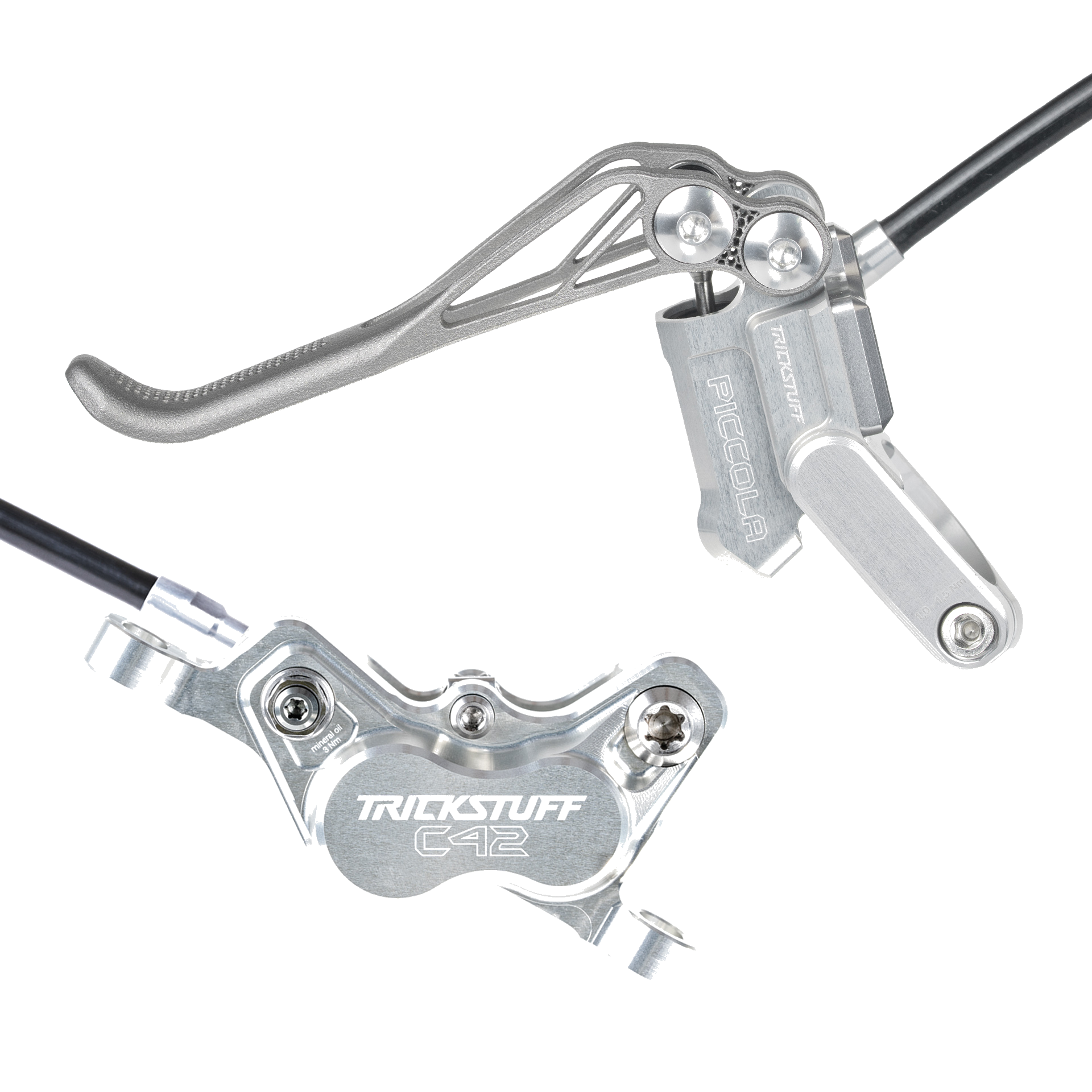
Trickstuff Piccola HD Titanium
Go anywhere power with featherlight titanium levers
Specifications
- Pistons
- 4-piston C42 (14/17mm)
- Brake Type
- Hydraulic disc
- Hose Connection
- Reusable angled fitting
- Brake Fluid
- Bionol (mineral)
- Reach Adjustment
- Yes
- Disk Size
- 160mm, 180mm, 203mm
- Disk Thickness
- 2.10mm
- Weight
- from 442g per set
- Features
- 3D-printed titanium levers, hollow SS pistons, C42 caliper
- Blade Material
- Titanium (3D printed)
- Contact Point Adjustment
- No
- Lever Pivot
- Ball bearing
Overview
The Piccola HD Titanium is built for self-supported alpinists and off-grid shredders who need maximum reliability with minimum weight. Featuring 3D-printed titanium brake levers — a world first — and a radially arranged pump housing, it pairs the refined Piccola pump with the powerful C42 four-piston caliper. A 9mm pump piston drives four 14/17mm pistons via a strong hydraulic ratio, while hollow stainless steel pistons and Bionol mineral oil deliver fade-resistant performance on the longest top-to-bottom runs. Heat-resistant construction means no forced cool-down stops on continuous descents exceeding 4000m.
Features
3D-printed titanium lever — world-first construction
Honeycomb surface texture for grip without gloves
C42 4-piston caliper with preloaded steel yoke bolts
Four hollow stainless steel pistons (14/17mm)
9mm pump piston with high hydraulic ratio
High-pressure Kevlar hose with reusable angled fitting
Bionol mineral oil for heat resistance at altitude
POWER+ 850 pads compatible with SRAM Guide
Individually designed left and right levers
Guides for setup
All guidesBrake Bed-in
The essential process for achieving maximum braking power.
Brake Bleeding
System-specific bleed procedures for Shimano, SRAM, and Magura — eliminate lever sponginess and restore full power.
Weather & Conditions Adaptation
Setup adjustments for wet, muddy, dry, and cold conditions — tires, suspension, drivetrain, and brakes.
How we evaluate this component
Product cards, analysis notes, and setup guidance are grounded in public specifications, market positioning, compatibility, and the most likely real-world use cases on trail.
Read the full methodology