
Pre-Ride Safety Check

The M-Check: Preventing mechanicals before they happen

Why Pre-Ride Checks Matter

The M-Check is a systematic inspection pattern used by World Cup mechanics before every race stage. It takes 5 minutes and catches 95% of potential mechanical failures before they happen. A loose stem bolt, worn brake pads, or low tire pressure can ruin your ride—or worse, cause a crash. This simple routine builds mechanical awareness and keeps you safe.

What Pre-Ride Checks Prevent

Regular Checks Prevent

  • Wheel ejection from loose quick-release/thru-axle
  • Handlebar/stem failure from loose bolts
  • Brake failure from worn pads or air in lines
  • Flat tires from low pressure or debris
  • Frame cracks before catastrophic failure

Skipping Checks Risks

  • Dangerous crashes from component failure
  • Being stranded on the trail with mechanical
  • Expensive repairs from undetected damage
  • Poor performance from worn components
  • Lost confidence on technical terrain

The M-Check Pattern

The M-Check follows an "M" pattern on your bike, ensuring you check every critical component systematically. Start at the front wheel, work up to the cockpit, down to the bottom bracket, and back up to the rear wheel.
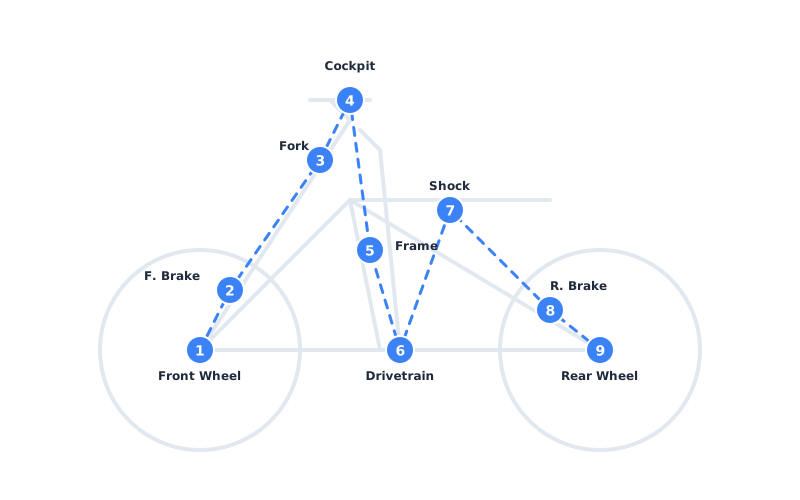
M-Check Pattern Diagram

The M-Pattern Order

  1. 1.Front Wheel → Check axle, spokes, tire
  2. 2.Front Brake → Check pads, rotor, lever feel
  3. 3.Fork & Headset → Check suspension, steering
  4. 4.Cockpit → Check stem, handlebars, controls
  5. 5.Frame → Check for cracks, pivot play
  6. 6.Drivetrain → Check chain, derailleur, shifting
  7. 7.Rear Shock → Check suspension, linkage
  8. 8.Rear Brake → Check pads, rotor, lever feel
  9. 9.Rear Wheel → Check axle, spokes, tire

5-Minute Pre-Ride Check

1Front Wheel

  • Axle: Ensure quick-release is tight or thru-axle is torqued (lift front wheel and bounce—should not rattle)
  • Spokes: Squeeze pairs of spokes—should have even tension, no loose spokes
  • Tire: Check pressure (squeeze with thumb), inspect for cuts or embedded debris
  • Rim: Spin wheel, check for wobble or damage

2Front Brake

  • Pads: Look through caliper—pads should have >1mm material left
  • Rotor: Check for warping (spin wheel, watch rotor clearance), look for oil contamination
  • Lever feel: Squeeze lever—should be firm, not spongy (spongy = air in system)
  • Function test: Roll bike forward, apply brake—should stop wheel immediately

3Fork & Headset

  • Suspension: Check air pressure (if air fork), compress fork—should rebound smoothly
  • Stanchions: Inspect for scratches or oil leaks
  • Headset: Apply front brake, rock bike forward/back—no clunking (loose headset)
  • Steering: Lift front wheel, turn bars—should move smoothly without notchiness

4Cockpit

  • Stem bolts: Check tightness (should not move when you try to twist bars)
  • Handlebar: Check for cracks at clamp areas, ensure grips are secure
  • Brake levers: Check clamp tightness, ensure levers don't rotate
  • Shifters: Check clamp tightness, test shifting through all gears

5Frame Inspection

  • Critical areas: Check welds, dropouts, and pivot points for cracks
  • Pivot bearings: Grab rear triangle, try to move side-to-side (no play = good)
  • Bottle cage: Check bolts are tight
  • Seatpost: Check clamp is tight (try to twist saddle)

6Drivetrain

  • Chain: Check for rust, stiff links, proper lubrication
  • Derailleur: Check hanger isn't bent, B-limit screw clearance
  • Shifting: Shift through all gears—should be crisp and quiet
  • Chainring: Check bolts are tight, teeth aren't excessively worn

7Rear Shock

  • Air pressure: Check pressure matches your sag setting
  • Function: Compress shock—should rebound smoothly
  • Shaft: Check for oil leaks around seals
  • Hardware: Check shock mounting bolts are tight

8Rear Brake

  • Pads: Check pad thickness (>1mm remaining)
  • Rotor: Check for warping and contamination
  • Lever feel: Should be firm, not spongy
  • Function test: Roll bike backward, apply brake

9Rear Wheel

  • Axle: Ensure thru-axle is fully tight
  • Spokes: Check tension, listen for pings when riding
  • Tire: Check pressure and tread condition
  • Cassette: Check lockring is tight (shouldn't rattle)

Post-Crash Inspection

⚠️ After Any Crash

Even a minor crash can damage critical components. Always perform these checks before continuing your ride.

Immediate Checks (Before Riding Again)

  • Wheels: Spin both wheels—check for wobble or brake rub
  • Handlebars: Ensure bars are straight and stem hasn't rotated
  • Brakes: Test both brakes—lever feel should be normal
  • Derailleur hanger: Shift through gears—bent hanger causes poor shifting
  • Frame: Quick visual check for obvious cracks or damage

Detailed Inspection (When You Get Home)

  • Check all frame tubes for cracks (especially carbon frames)
  • Inspect fork stanchions for scratches or dents
  • Check wheel rims for dents or cracks
  • Verify all bolts are still properly torqued
  • Check brake rotors for warping

Pro Tips for Pre-Ride Checks

✓ Make It a Ritual

Do your M-Check in the same order every time. It becomes muscle memory—you'll finish in 5 minutes and never miss a step. World Cup mechanics can do a full check in under 3 minutes.

✓ Use Your Senses

Listen for unusual sounds (creaks, clicks, grinding). Feel for play in bearings. Look for visual damage. Your senses catch problems before they become failures.

✓ Carry Basic Tools

Multi-tool, tire levers, spare tube, pump, and chain quick-link. If your pre-ride check finds an issue, you can often fix it trail-side instead of walking home.

✓ Check Torque Specs

Invest in a torque wrench. Over-tightening carbon components causes cracks. Under-tightening causes slippage. Proper torque = safe and reliable.

✓ Deep Check Monthly

Once a month, do a thorough inspection: check all bolts with torque wrench, inspect frame closely, check pivot bearings for play, measure chain wear.

✓ Trust Your Gut

If something feels off—weird noise, different handling, unusual vibration—stop and investigate. Your instincts are usually right. Better safe than crashed.

Next: Tire Selection Guide

Your bike is mechanically sound. Now learn how to choose the right tires for different conditions to maximize traction and confidence.